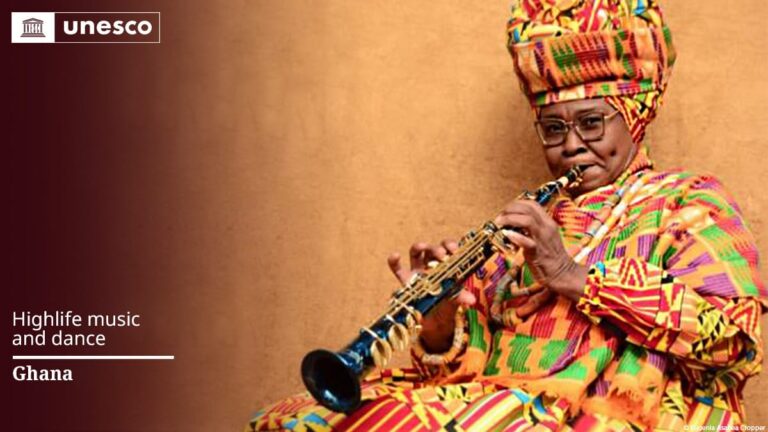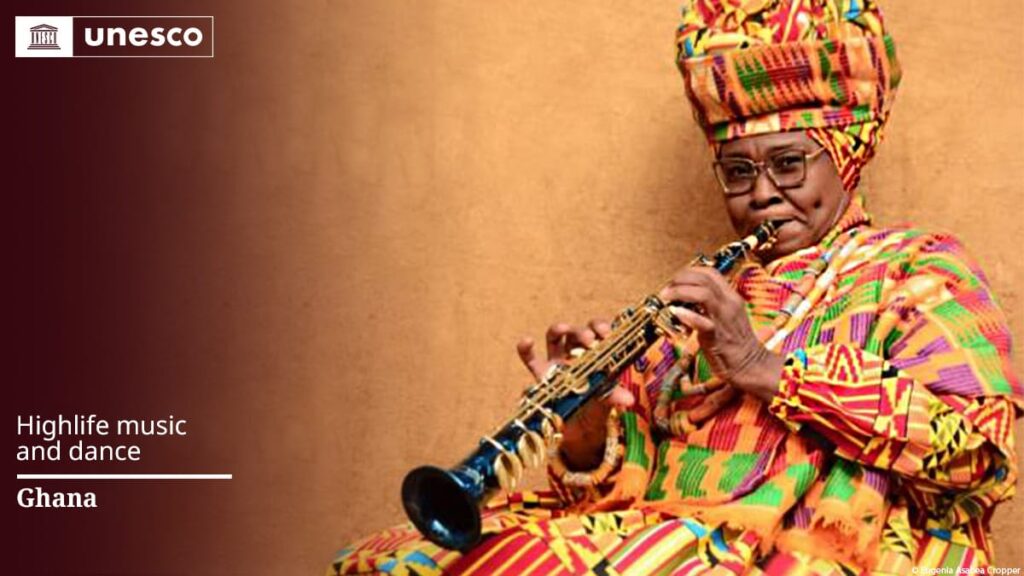
Ghana’s celebrated Highlife music has officially been inscribed on UNESCO’s Representative List of Intangible Cultural Heritage of Humanity, marking a significant global acknowledgment of the country’s cultural identity. The announcement was made on Wednesday, December 10, 2025, during the 20th session of the UNESCO Intergovernmental Committee in New Delhi, India.
UNESCO described Highlife as a “monumental expression of Ghana’s musical genius, culture, and global influence,” recognizing the contributions of musicians, culture bearers, communities, and institutions that have preserved and modernized the genre across generations. This recognition places Highlife among the world’s protected cultural treasures and underscores its status as a defining component of Ghanaian identity.
The genre, which has endured for over a century, is widely regarded as Ghana’s most enduring sonic tradition. Its rhythms, horn arrangements, and storytelling have shaped national consciousness, while influencing subsequent musical forms such as hiplife and Afrobeats. Highlife’s songs serve as a mirror of social life, addressing themes such as love, morality, migration, community engagement, and national aspirations, connecting with audiences across ethnicity, age, and social class.
Highlife’s legacy is closely associated with iconic musicians including E.T. Mensah, Nana Ampadu, Paapa Yankson, A.B. Crentsil, Amakye Dede, Kojo Antwi, Rex Omar, and the late K.K. Kabobo. Their work has not only preserved the genre but has also facilitated its modernization and sustained relevance across generations.
The formal inscription was the culmination of a coordinated effort led by the Ghana Folklore Board and the Musicians Union of Ghana, which submitted the official nomination dossier for “Highlife Music and Dance” in April 2025. The listing confirms Highlife as an original cultural product of Ghana, ensuring its protection from claims by other countries and positioning it alongside globally recognized musical genres such as Jamaica’s reggae and Congo’s rhumba.
Highlife’s inclusion in UNESCO’s Intangible Cultural Heritage list affirms the enduring significance of Ghanaian musical traditions, highlighting the country’s contributions to the global cultural landscape and securing a platform for continued preservation and celebration of its unique musical heritage.